

Defense mechanisms are mental functions responding to internal or external perceptions clashing with personal desires, feelings, or self-views – complex emotional-cognitive constellations.
Historical Context of Defense Mechanism Theory
The exploration of defense mechanisms began with Sigmund Freud’s psychoanalytic theory, initially focusing on unconscious processes mediating conflicts between instinctual drives (id) and reality (ego). This foundational work, however, was significantly expanded upon by Anna Freud, who systematically categorized and detailed a wider range of these mental strategies.
Later contributions from researchers like George Vaillant aimed to create exhaustive lists, even including adaptive coping strategies within the framework. Contemporary understanding views these mechanisms as well-evidenced behavioral patterns potentially traceable to common mental operations, rooted in conflicts between drives and the individual’s rational sphere. The field continues to evolve, seeking neurobiological underpinnings for these complex psychological constructs.
Sigmund Freud’s Initial Concepts
Sigmund Freud initially conceived of defense mechanisms as unconscious strategies employed by the ego to protect itself from anxiety arising from unacceptable impulses originating from the id, operating on the pleasure principle. These mechanisms were seen as distortions of reality, reducing psychic conflict.
His early work highlighted the fundamental tension between the id’s desires and the ego’s adherence to the reality principle. While not explicitly detailing a comprehensive list, Freud identified core concepts like repression – the unconscious blocking of distressing thoughts – laying the groundwork for later elaborations. These initial ideas framed defense mechanisms as essential for maintaining psychological equilibrium, albeit at the cost of complete self-awareness.
Anna Freud’s Expansion of Defense Mechanisms
Anna Freud significantly expanded upon her father’s initial concepts, meticulously cataloging and detailing a wider range of defense mechanisms. Building on the psychodynamic approach, she viewed these mechanisms as activated in response to conflicts between drives – like libido and aggression – and the differing principles governing the id and ego.
Her work moved beyond simply identifying these defenses to analyzing their nuances and adaptive functions. She proposed a more comprehensive framework, recognizing that defense mechanisms aren’t inherently pathological but represent strategies for coping with internal and external stressors. This broadened understanding paved the way for exploring their role in both normal and disordered psychological functioning.

Core Defense Mechanisms: A Detailed Overview
Core defenses – repression, denial, projection, displacement, rationalization, and sublimation – address conflicting percepts, safeguarding the ego from distressing internal or external realities.
Repression: Unconscious Blocking of Unacceptable Thoughts
Repression, a fundamental defense mechanism, involves the unconscious blocking of unacceptable thoughts, feelings, or impulses from conscious awareness. This isn’t simply forgetting; it’s an active, albeit unconscious, process driven by internal conflict – specifically, clashes between the id’s pleasure principle and the ego’s reality principle.
According to psychodynamic theory, these conflicts arise from libidinous drives and aggression. The brain actively works to prevent distressing content from reaching consciousness, minimizing anxiety and maintaining psychological equilibrium. While seemingly straightforward, the neurobiological underpinnings are complex, potentially involving prefrontal cortex regulation and amygdala activation.
Repressed material doesn’t disappear; it influences behavior indirectly, often manifesting in dreams, slips of the tongue, or neurotic symptoms. Understanding repression is crucial for comprehending the broader landscape of defense mechanisms.
Denial: Refusal to Accept Reality
Denial represents a defense mechanism where individuals refuse to acknowledge the reality of a distressing situation or painful truth. It’s a primitive defense, often employed as an initial response to overwhelming events, shielding the ego from unbearable anxiety. This isn’t necessarily a conscious lie; it can operate outside of awareness, distorting perception and minimizing the impact of reality.
Psychodynamically, denial stems from conflicts between internal wishes and external realities. The brain, attempting to maintain psychological homeostasis, actively rejects information that threatens self-concept or well-being. Neurobiological research suggests involvement of prefrontal cortex areas responsible for reality testing, alongside emotional regulation centers.
While temporarily protective, prolonged denial can impede adaptive coping and hinder problem-solving, potentially escalating distress over time.
Projection: Attributing Unacceptable Qualities to Others
Projection is a defense mechanism involving attributing one’s own unacceptable thoughts, feelings, or impulses to another person. Instead of acknowledging these traits within oneself, the individual perceives them as originating in someone else, reducing internal conflict and maintaining a positive self-image. This isn’t simply misjudgment; it’s an unconscious process driven by internal anxieties.
From a psychodynamic perspective, projection arises from conflicts between the id’s impulses and the ego’s moral constraints. The brain, seeking to avoid self-condemnation, externalizes these undesirable aspects. Neurological studies suggest potential involvement of brain regions associated with social cognition and self-perception.
While offering temporary relief, projection can damage relationships and distort reality.
Displacement: Redirecting Emotions to a Safer Target

Displacement functions as a defense mechanism where emotions, often negative, are redirected from their original source – typically a threatening or powerful figure – towards a less threatening and safer target. This allows for the expression of feelings without facing direct consequences or anxieties associated with the initial trigger. It’s a subconscious strategy to manage overwhelming emotional distress.
Psychodynamic theory posits displacement stems from conflicts between instinctual drives and societal constraints. The brain, seeking emotional release, finds a substitute outlet. Neurobiological research suggests involvement of limbic system structures, particularly those regulating emotional responses and threat assessment.
Though providing temporary relief, displacement can manifest in unhealthy behaviors.
Rationalization: Creating Logical Explanations for Unacceptable Behavior
Rationalization is a defense mechanism involving the creation of seemingly logical or socially acceptable explanations to justify actions or feelings that are otherwise unacceptable or distressing. It’s a post-hoc construction of reasoning, shielding the ego from guilt or shame. This process isn’t about truth-seeking, but rather about maintaining a positive self-image.
From a psychodynamic perspective, rationalization arises from conflicts between the id’s impulses and the ego’s moral constraints. The brain actively reinterprets events to reduce cognitive dissonance. Neuroimaging studies suggest prefrontal cortex activity is crucial, as it’s involved in executive functions like justification and self-deception.
While reducing immediate discomfort, excessive rationalization hinders self-awareness.
Sublimation: Channeling Unacceptable Impulses into Socially Acceptable Activities
Sublimation represents a mature defense mechanism where unacceptable impulses, often aggressive or sexual in nature, are transformed into socially valued and constructive activities. Unlike repression, sublimation doesn’t involve blocking the impulse, but redirecting its energy. This allows for gratification without causing harm or guilt.
Psychodynamic theory posits that sublimation resolves conflicts between the id and superego, offering a healthy outlet. Neurobiological research suggests involvement of reward pathways; the sublimated activity activates brain regions associated with pleasure and motivation.
Artistic expression, athletic pursuits, and altruistic behavior are frequently cited examples of sublimation, fostering personal growth and societal contribution.

More Complex Defense Mechanisms
Complex defenses, like reaction formation and regression, involve intricate psychological maneuvers to manage internal conflicts and protect the ego from distress.
Reaction Formation: Behaving Opposite to One’s True Feelings
Reaction formation represents a sophisticated defense where individuals adopt behaviors and express feelings directly contradictory to their unconscious impulses. This isn’t simply suppressing an unwanted emotion; it’s actively displaying its opposite. For example, someone harboring hostile feelings might exhibit excessive politeness or affection towards the target of their animosity.
This mechanism serves to protect the ego from acknowledging unacceptable desires or emotions, maintaining a semblance of psychological equilibrium. It’s a complex interplay between unconscious drives and conscious expression, often manifesting in exaggerated or rigid behavioral patterns. The underlying, unacceptable feeling remains hidden, while the overt behavior presents a socially acceptable facade. Understanding this defense requires recognizing the discrepancy between expressed behavior and potential underlying motivations.
Regression: Reverting to Earlier Stages of Development
Regression is a defense mechanism characterized by a reversion to earlier stages of psychosexual development, typically in response to overwhelming stress or anxiety. Individuals may exhibit behaviors more typical of childhood or adolescence, seeking comfort in patterns previously outgrown. This can manifest as increased dependency, emotional outbursts, or a return to immature coping strategies.
Essentially, when faced with challenges, the ego retreats to a developmental phase where the individual experienced greater comfort and security. This isn’t a conscious choice, but rather an unconscious attempt to reduce anxiety by temporarily abandoning more mature adaptive mechanisms. Sensorimotor regression, a specific form, suggests integration of neuronal activity across brain regions is involved in this process.
Intellectualization: Avoiding Emotions by Focusing on Intellectual Aspects
Intellectualization functions as a defense mechanism where emotional content is avoided by focusing on the intellectual aspects of a situation; Individuals analyze events distantly, detaching themselves from the associated feelings. This creates a buffer against distressing emotions, allowing discussion of traumatic experiences without experiencing the full emotional impact.
It’s a way to gain a sense of control by reducing the overwhelming nature of feelings. This process involves complex emotional-cognitive constellations, potentially integrating neuronal activity across several brain regions. While seemingly adaptive, excessive intellectualization can hinder genuine emotional processing and interpersonal connection, preventing full resolution of underlying conflicts.
Compartmentalization: Separating Conflicting Thoughts and Feelings
Compartmentalization involves separating conflicting thoughts, feelings, and behaviors into distinct “compartments,” preventing them from influencing each other. This defense mechanism allows individuals to hold contradictory beliefs or engage in actions that would otherwise cause cognitive dissonance. It’s a way to manage internal conflict by limiting awareness of the inconsistencies.
This process, a complex emotional-cognitive constellation, potentially relies on specific functional mechanisms integrating neuronal activity across brain regions. While offering temporary relief, excessive compartmentalization can lead to a fragmented sense of self and difficulty integrating experiences. It hinders holistic self-understanding and authentic emotional expression, impacting interpersonal relationships.
Undoing: Attempting to Take Back Actions or Thoughts
Undoing is a defense mechanism where an individual attempts to negate or symbolically “undo” a thought or action, typically one perceived as unacceptable or harmful. This often manifests as ritualistic behaviors or compulsive acts intended to counteract the original transgression. It’s driven by guilt or anxiety surrounding the initial impulse.
As a psychoanalytic construct, undoing represents a complex emotional-cognitive constellation, potentially linked to specific neuronal integration patterns within the brain. While offering temporary anxiety reduction, it reinforces the underlying problematic thought or behavior. This mechanism can become maladaptive, contributing to obsessive-compulsive tendencies and hindering genuine resolution of internal conflicts.

Defense Mechanisms in Development

Development sees defense mechanism usage evolve; childhood and adolescence demonstrate unique patterns, shaping personality formation through complex emotional-cognitive constellations and neuronal activity.
Developmental Stages and Defense Mechanism Usage
Defense mechanism utilization shifts across developmental stages, reflecting evolving cognitive and emotional capacities. Early childhood often features primitive defenses like regression and projection, stemming from immature ego development and limited impulse control. As children mature, more adaptive mechanisms—such as sublimation and rationalization—emerge, facilitating social integration and emotional regulation.
Adolescence presents a period of heightened conflict and identity formation, potentially leading to increased reliance on defenses like denial or intellectualization. Porcerelli et al. (1998) highlight developmental changes in defense mechanisms, noting variations across childhood, adolescence, and late adolescence. Understanding these stage-specific patterns is crucial for assessing psychological functioning and tailoring interventions to address maladaptive coping strategies.
Defense Mechanisms in Childhood and Adolescence
Childhood witnesses the initial development of defense mechanisms, often manifesting as regression – reverting to earlier behavioral patterns under stress. Projection, attributing unwanted feelings to others, is also common as children struggle with self-awareness. Adolescence, marked by identity exploration and hormonal shifts, sees increased complexity.

Denial and intellectualization may surface as teens grapple with difficult emotions or experiences. Porcerelli et al. (1998) demonstrate that defense profiles evolve during these years, with adolescents exhibiting greater use of mature defenses compared to children. However, maladaptive reliance on any mechanism can hinder healthy development, impacting social relationships and emotional well-being. Recognizing these patterns is vital for supporting youth mental health.
The Role of Defense Mechanisms in Personality Formation
Defense mechanisms profoundly shape personality, becoming ingrained patterns over time. Consistent reliance on specific mechanisms, developed in response to early experiences, contributes to an individual’s characteristic way of interacting with the world. For instance, habitual use of repression might lead to a reserved and emotionally constricted personality.
Conversely, sublimation can foster creativity and prosocial behavior; The interplay between innate temperament and environmental factors determines which defenses are favored. These patterns aren’t static; they can evolve with maturity and therapeutic intervention. Understanding this dynamic is crucial for comprehending personality structure and addressing maladaptive traits.
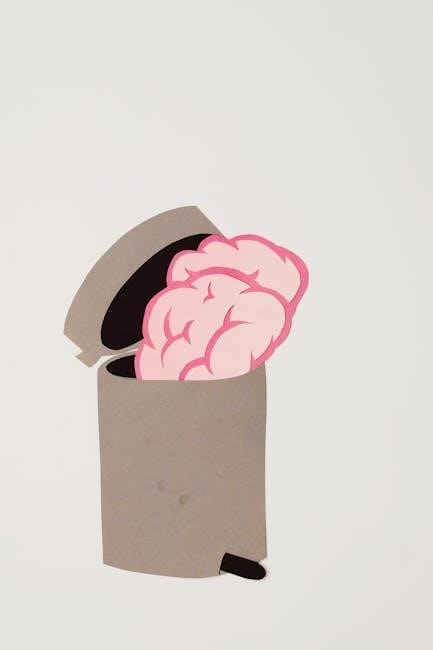
Neurobiological Basis of Defense Mechanisms
Neuroscientists presume brain structure and function underlie defense mechanisms, integrating neuronal activity across regions involved in emotional regulation and cognitive processing.
Brain Regions Involved in Emotional Regulation
Emotional regulation relies on a complex interplay of brain regions. The prefrontal cortex plays a crucial role, exerting top-down control over emotional responses generated in subcortical areas. Specifically, the amygdala is central to detecting threats and initiating fear responses, a key component in activating defense mechanisms.
However, the amygdala’s activity isn’t solely reactive; it’s modulated by the prefrontal cortex, allowing for nuanced emotional processing. Furthermore, interactions with other regions, like the hippocampus (involved in contextualizing memories) and anterior cingulate cortex (monitoring conflict), contribute to the overall regulation process. These integrated networks enable individuals to adaptively respond to stressors, utilizing defense mechanisms as part of this complex neurobiological orchestration.
The Role of the Prefrontal Cortex
The prefrontal cortex (PFC) is paramount in emotional regulation and, consequently, the orchestration of defense mechanisms. It exerts top-down control, modulating the activity of subcortical regions like the amygdala. This control isn’t simply suppression; it involves cognitive reappraisal, reinterpreting emotional stimuli to alter their impact.
Different PFC subregions contribute uniquely. The dorsolateral PFC facilitates working memory and cognitive flexibility, aiding in rationalizing or intellectualizing distressing experiences. The ventromedial PFC integrates emotional information with decision-making, influencing the selection of appropriate defense strategies. Damage to the PFC often results in impaired emotional regulation and increased reliance on maladaptive defenses, highlighting its critical role in maintaining psychological equilibrium.
Amygdala and Defense Mechanism Activation
The amygdala serves as the brain’s emotional sentinel, rapidly detecting threats and triggering physiological arousal. It’s central to the initial activation of defense mechanisms, particularly in response to perceived danger or internal conflict. When faced with a distressing stimulus, the amygdala initiates a cascade of responses, prompting the ego to deploy defenses.
However, the amygdala doesn’t operate in isolation. Its interaction with the prefrontal cortex is crucial. While the amygdala generates emotional reactivity, the PFC modulates this response, determining which defense mechanisms are engaged. Overactivity in the amygdala, coupled with diminished PFC control, can lead to impulsive and maladaptive defensive behaviors, underscoring the importance of balanced amygdala-PFC communication.

Measuring and Assessing Defense Mechanisms
Psychodiagnostic methods aim to quantify defense mechanisms, though assessment presents challenges due to their often unconscious nature and complexity of human behavior.
Psychodiagnostic Methods for Measuring Defense Mechanisms
Researchers employ various psychodiagnostic tools to explore defense mechanisms, acknowledging inherent difficulties in their assessment. Porcerelli et al. (1998) suggest methods for evaluating these mechanisms across developmental stages – childhood, adolescence, and late adolescence. These approaches often rely on observational studies, projective tests, and self-report questionnaires, aiming to identify patterns indicative of specific defense strategies.
However, the unconscious nature of many defense mechanisms poses a significant hurdle. Direct self-reporting can be unreliable, as individuals may lack insight into their own psychological processes or be unwilling to admit to socially undesirable behaviors. Consequently, indirect methods, such as analyzing verbal and nonverbal cues, are frequently utilized. The simplicity of the research process is a key advantage of some proposed methods, striving for practical application in clinical settings.
Challenges in Assessing Defense Mechanisms
Assessing defense mechanisms presents considerable challenges due to their largely unconscious operation. Individuals often lack awareness of employing these strategies, making reliable self-reporting difficult. Furthermore, social desirability bias can influence responses, leading to underreporting of less acceptable defenses. The subjective interpretation required in many assessment methods introduces potential for researcher bias, impacting the validity of findings.
Distinguishing adaptive coping strategies from maladaptive defense mechanisms also proves complex. What appears as a healthy coping mechanism in one context might function as a defense against underlying distress in another. Establishing clear diagnostic criteria and standardized assessment procedures remains a significant hurdle. The inherent complexity of these psychological constructs necessitates cautious interpretation of assessment results.

Defense Mechanisms and Mental Health
Defense mechanisms can be adaptive or maladaptive, playing a role in conditions like anxiety, depression, and personality disorders, impacting emotional well-being.
Adaptive vs. Maladaptive Defense Mechanisms
Distinguishing between adaptive and maladaptive defense mechanisms is crucial for understanding their impact on mental health. Adaptive defenses, such as sublimation – channeling unacceptable impulses into socially acceptable activities – generally promote psychological well-being and effective coping. These mechanisms allow individuals to navigate stressful situations without significant emotional distress or impairment.
Conversely, maladaptive defenses, like repression or denial, can hinder personal growth and contribute to psychological problems. While offering temporary relief, they often distort reality and prevent individuals from addressing underlying conflicts. Prolonged reliance on maladaptive strategies can exacerbate symptoms of anxiety, depression, and personality disorders, ultimately diminishing overall functioning and quality of life.
The key lies in the flexibility and appropriateness of the defense used in relation to the specific stressor and the individual’s overall psychological state.
Defense Mechanisms in Anxiety and Depression
Defense mechanisms play a significant role in the manifestation and maintenance of both anxiety and depression. In anxiety disorders, individuals frequently employ defenses like denial or intellectualization to avoid overwhelming emotional experiences. These strategies, while initially reducing distress, can prevent effective problem-solving and perpetuate anxious feelings.
Depression often involves the use of maladaptive defenses such as repression, where painful thoughts and feelings are unconsciously blocked from awareness. This can lead to a sense of emotional numbness and difficulty experiencing joy. Furthermore, reaction formation – behaving opposite to one’s true feelings – may mask underlying sadness with outward displays of cheerfulness.
Understanding these defensive patterns is vital for targeted therapeutic interventions.
Defense Mechanisms in Personality Disorders
Personality disorders are often characterized by rigid and pervasive patterns of defense mechanisms, significantly impacting interpersonal functioning and overall psychological well-being. Individuals with borderline personality disorder frequently utilize splitting – viewing others as entirely good or bad – to manage intense emotional instability.
Narcissistic personality disorder often involves grandiosity and a reliance on fantasy, serving as defenses against feelings of inadequacy. Those with obsessive-compulsive personality disorder may employ intellectualization and rationalization to control anxiety and maintain a sense of order.
These deeply ingrained defensive strategies contribute to the core features of these disorders, making treatment challenging but potentially transformative through focused therapeutic intervention.